::: STUDENT :::
::: TEACHER :::
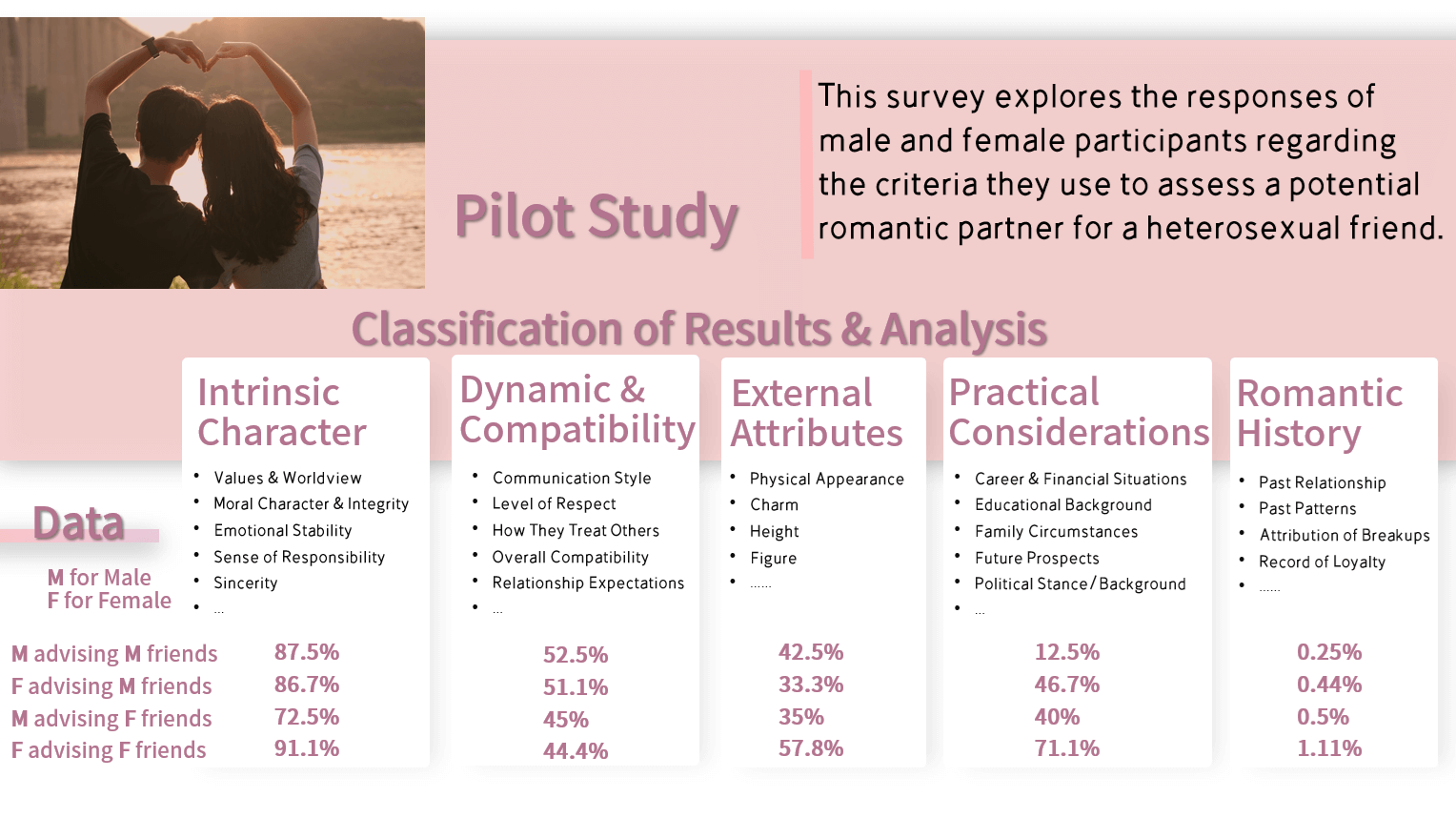
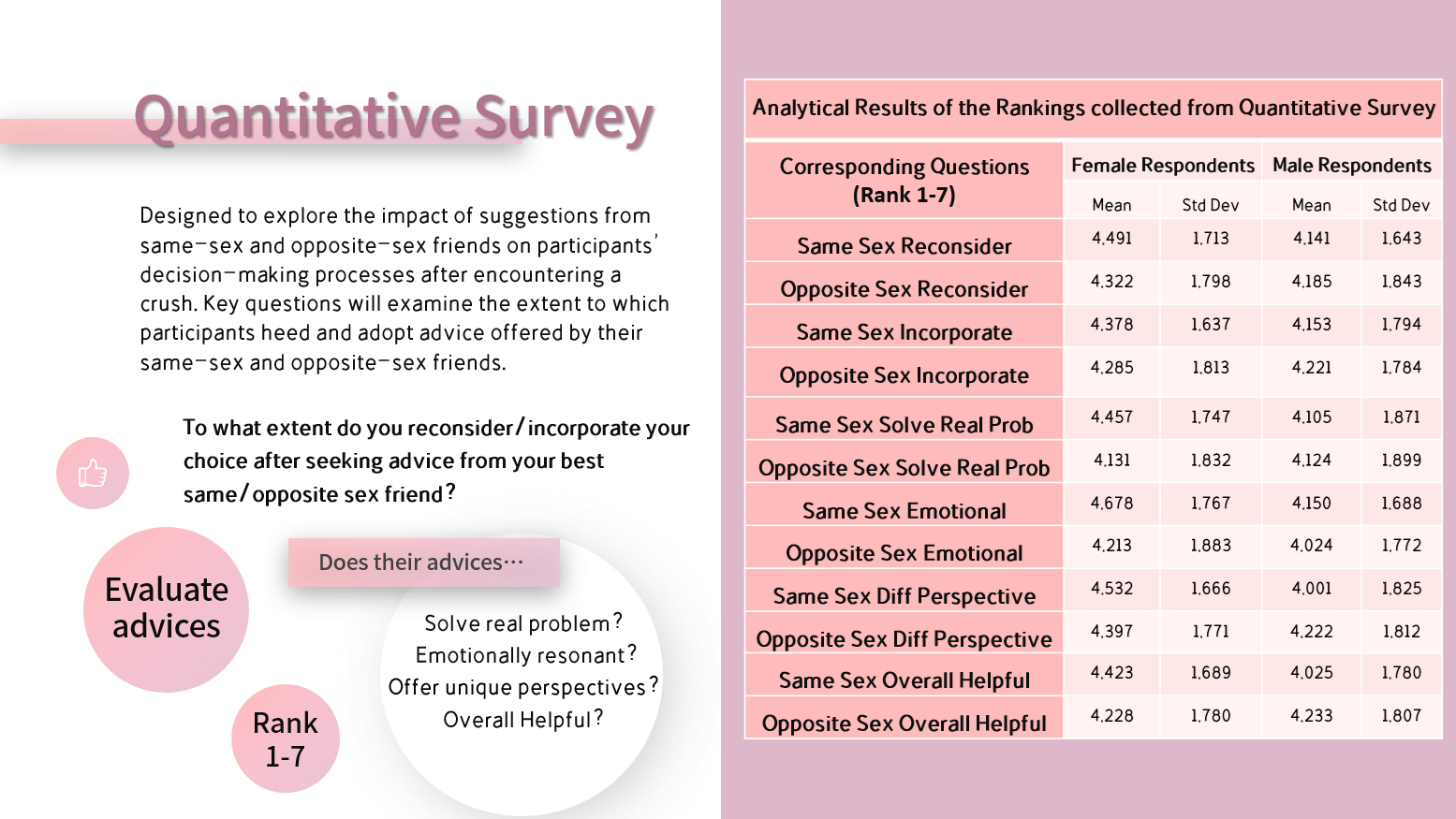
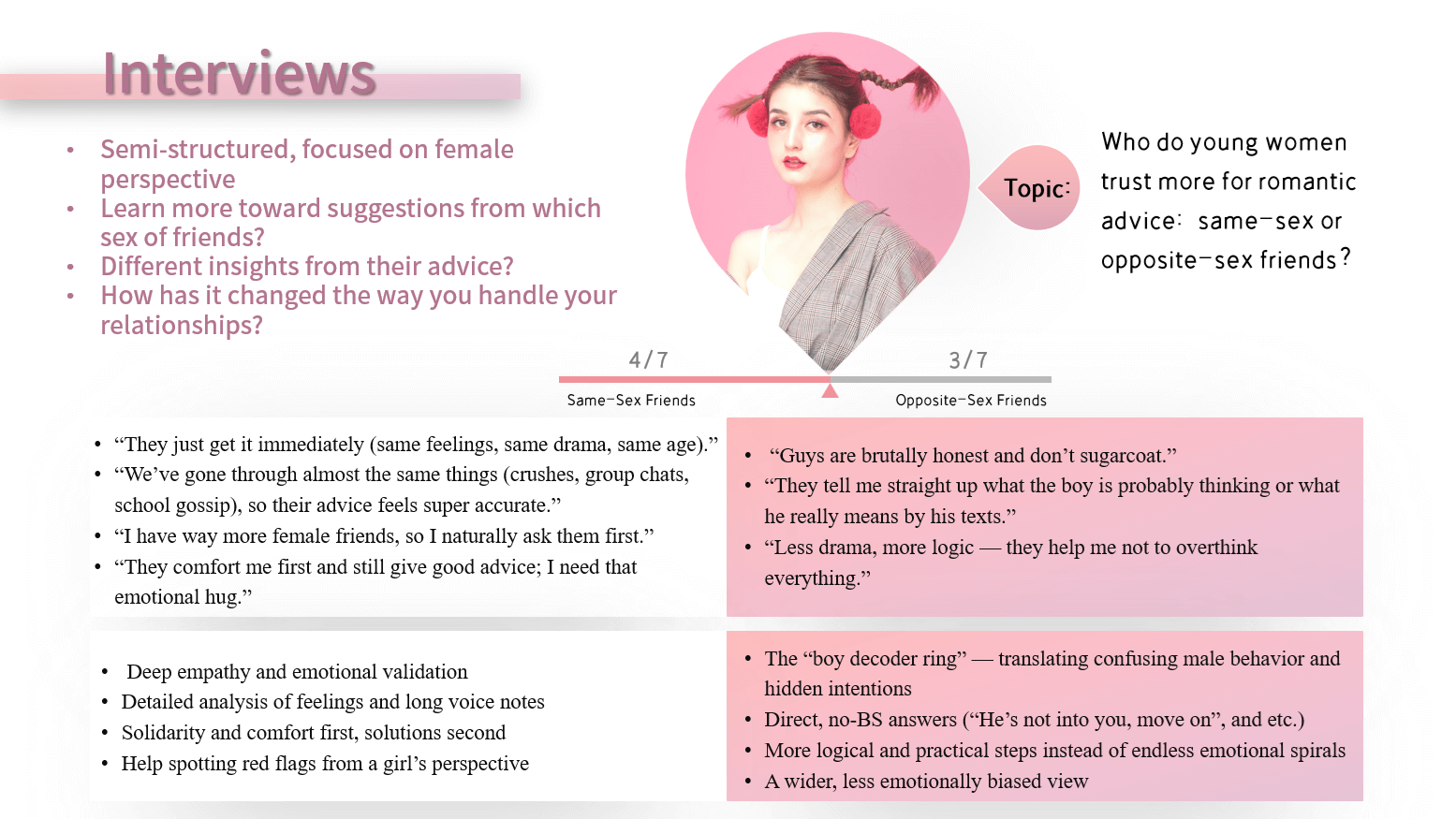
In contemporary society, when young people develop an interest in a potential romantic partner, they often share this informaiton with their best friend and seek their advice. This project linked such a common practice to the Parental Investment Theory and evaluated the effectiveness of the advice from same-sex vs opposite-sex through multiple dimensions. This study was conducted in two phases, beginning with a pilot study that used an open-question survey to qualitatively assess the applicability of Parental Investment Theory among young adults. The second phase involved a structured questionnaire to explore the impact of suggestions from friends of different sexes, followed by a semi-structured interviews that provided deeper insights into how gender-related thinking patterns influenced young people's decision-making.
In contemporary society, when young people develop an interest in a potential romantic partner, they often share this informaiton with their best friend and seek their advice. This project linked such a common practice to the Parental Investment Theory and evaluated the effectiveness of the advice from same-sex vs opposite-sex through multiple dimensions. This study was conducted in two phases, beginning with a pilot study that used an open-question survey to qualitatively assess the applicability of Parental Investment Theory among young adults. The second phase involved a structured questionnaire to explore the impact of suggestions from friends of different sexes, followed by a semi-structured interviews that provided deeper insights into how gender-related thinking patterns influenced young people's decision-making.
::: STUDENT :::
CHU Tat Chi Ryan; AU Mung Sze; BUTUZOV Anatoly; LEUNG Jammie Tsun Man; NG Wing Chi; XING Jia; YANG Wenshuo
::: TEACHER :::
Professor LAI Chuk Ling; MO Liqinzi Molly; TANG Changyuan
Department of Social and Behavioural Sciences
GE2109 - Love, Sex, and Relationships: Psychological Perspectives