::: STUDENT :::
::: TEACHER :::
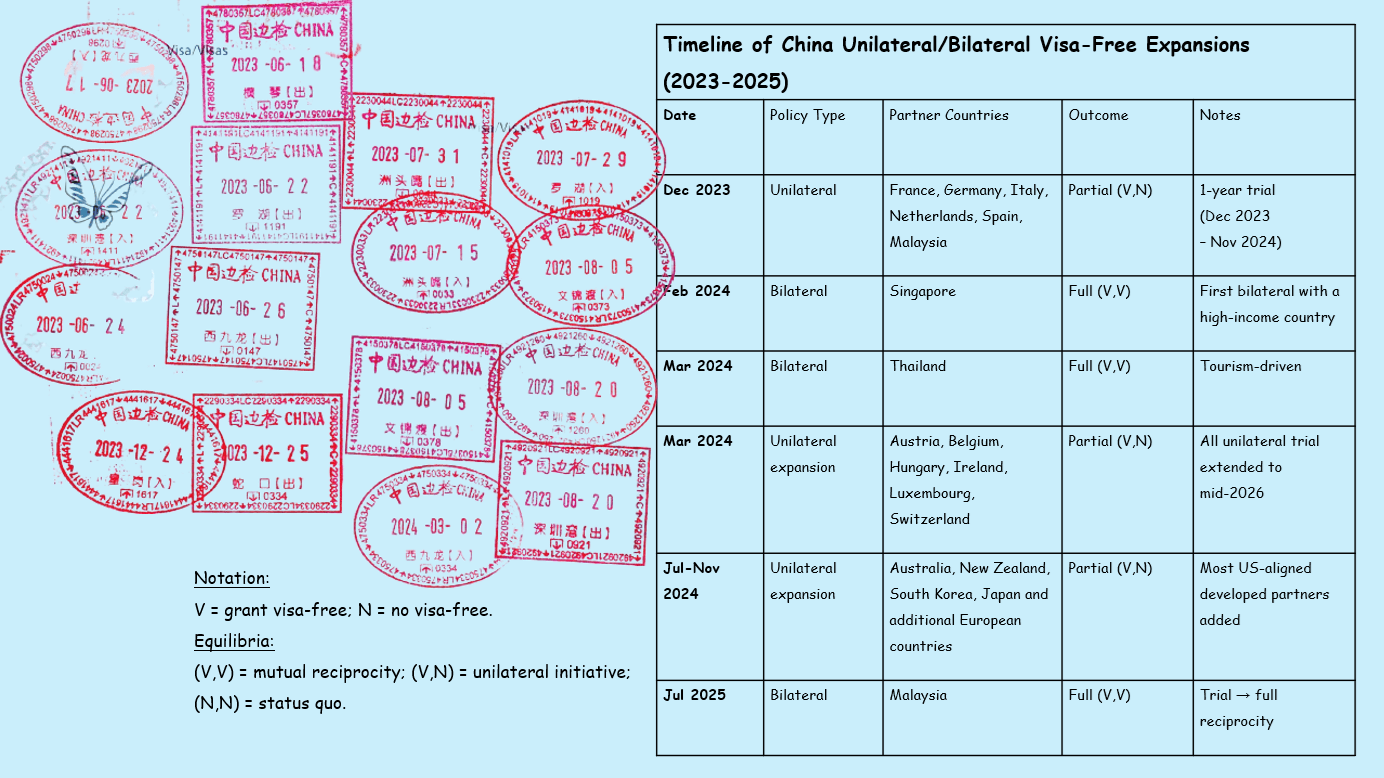
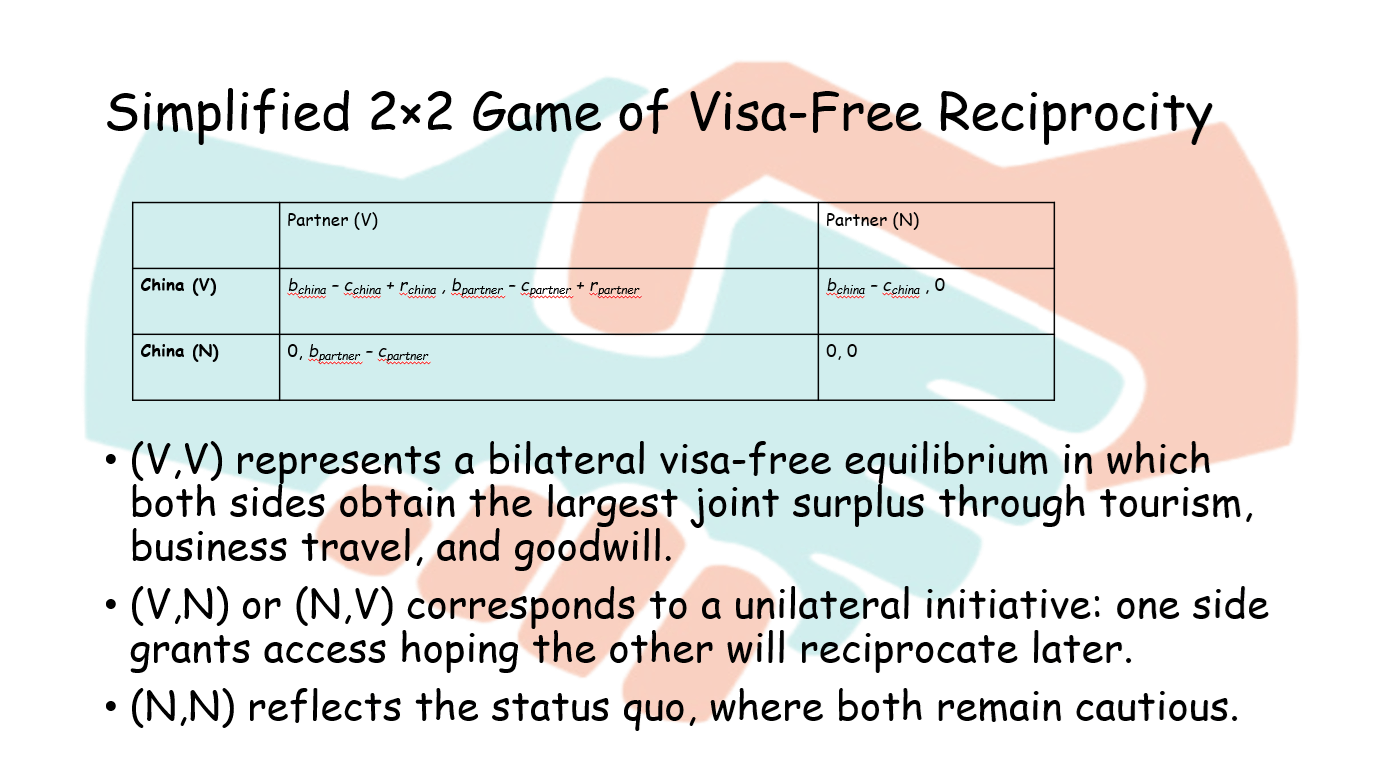
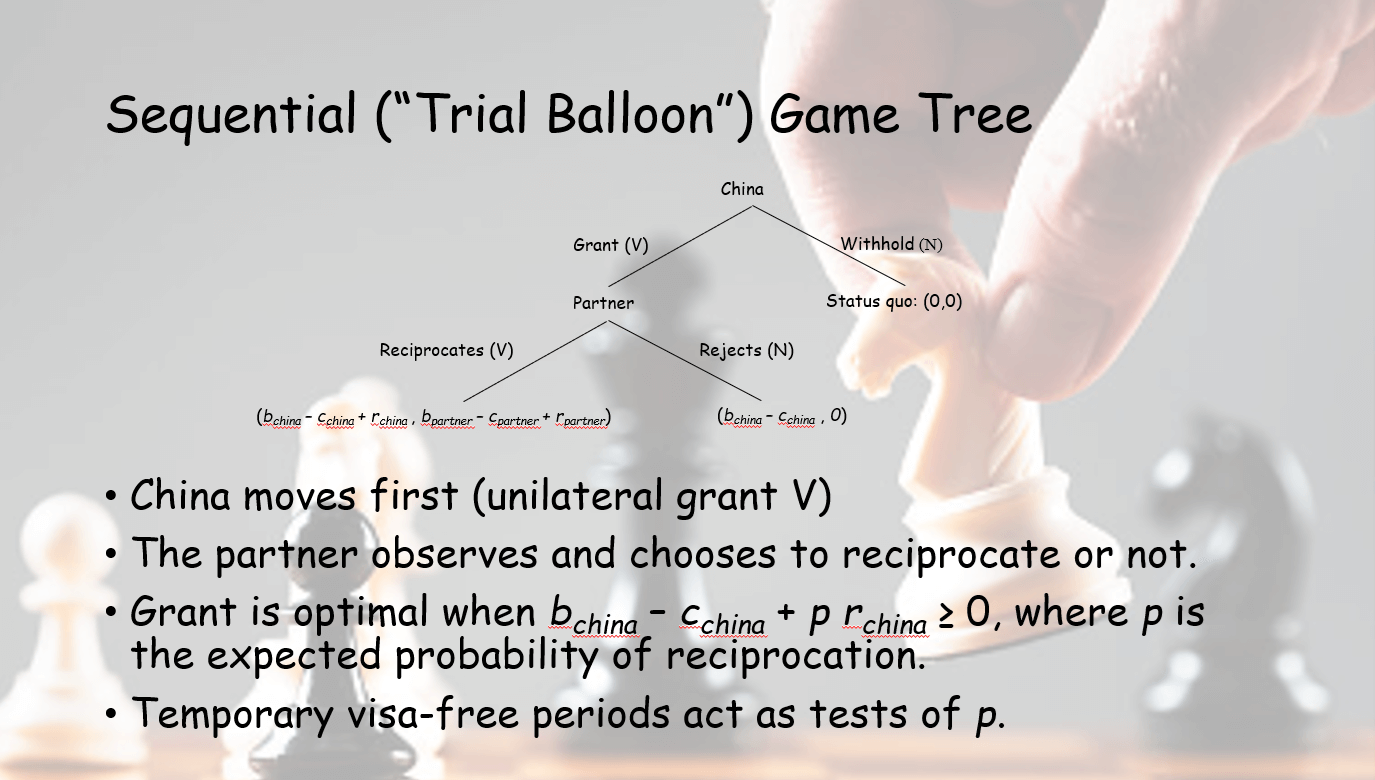
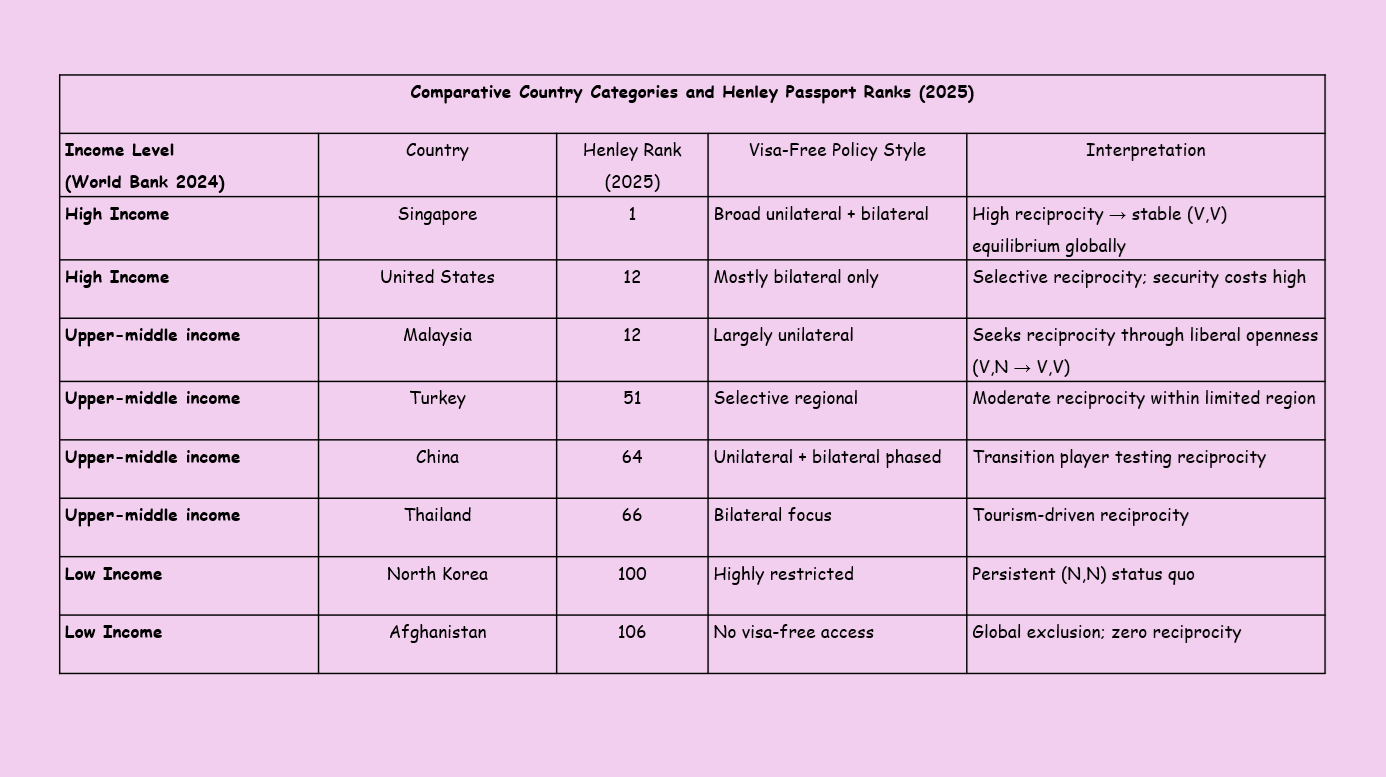
This project examines China’s 2023–2025 visa-free policy expansions through the lens of game theory. By modelling interactions between China and its partner countries as coordination, sequential, and incomplete-information games, the study explains why China adopted unilateral visa-free arrangements and how these policies developed into selective bilateral agreements. The analysis draws on Nash, Subgame-Perfect Nash, and Bayes-Nash Equilibria, and connects theoretical predictions to real-world outcomes using data from the Henley Passport Index. The project demonstrates how strategic trust, reciprocity, and belief updating shape visa policy decisions, offering an integrated approach that blends international relations, economics, and formal modelling.
This project examines China’s 2023–2025 visa-free policy expansions through the lens of game theory. By modelling interactions between China and its partner countries as coordination, sequential, and incomplete-information games, the study explains why China adopted unilateral visa-free arrangements and how these policies developed into selective bilateral agreements. The analysis draws on Nash, Subgame-Perfect Nash, and Bayes-Nash Equilibria, and connects theoretical predictions to real-world outcomes using data from the Henley Passport Index. The project demonstrates how strategic trust, reciprocity, and belief updating shape visa policy decisions, offering an integrated approach that blends international relations, economics, and formal modelling.
::: STUDENT :::
LIEW Kok Bin
::: TEACHER :::
Professor Nilanjan ROY
Department of Economics and Finance
GE2256 - Applications of Game Theory to Business